District tour: The 4th District — Wieden
Karlskirche, Freihausviertel, Schleifmühlgasse: Wieden is small, central and lively — a district where you can get everywhere on foot.
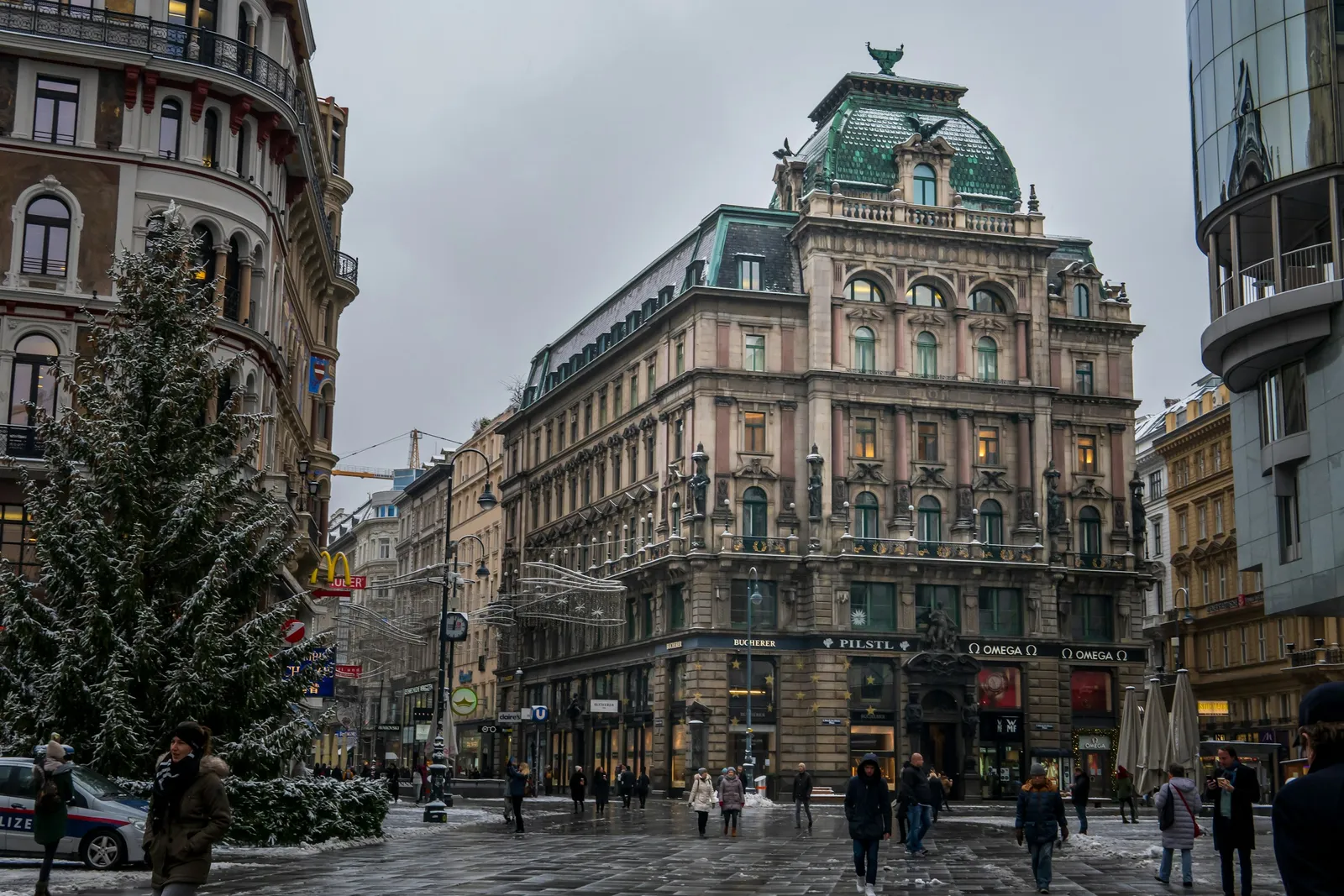
The fourth district is one of the smallest in the city — and one of the liveliest. It’s a twenty-minute walk from Karlsplatz to Südtiroler Platz, and along the way you’ll find everything that makes Vienna what it is: Baroque architecture, coffee houses, markets, the university, Gründerzeit buildings and a railway station. Wieden is a district where you can reach everything on foot and still feel as though you’re living in a big city.
We like Wieden because it’s underrated. Anyone who knows it realises that, over the last twenty years, it has transformed from a transit district into a residential neighbourhood that its residents are reluctant to leave.
From Karlsplatz
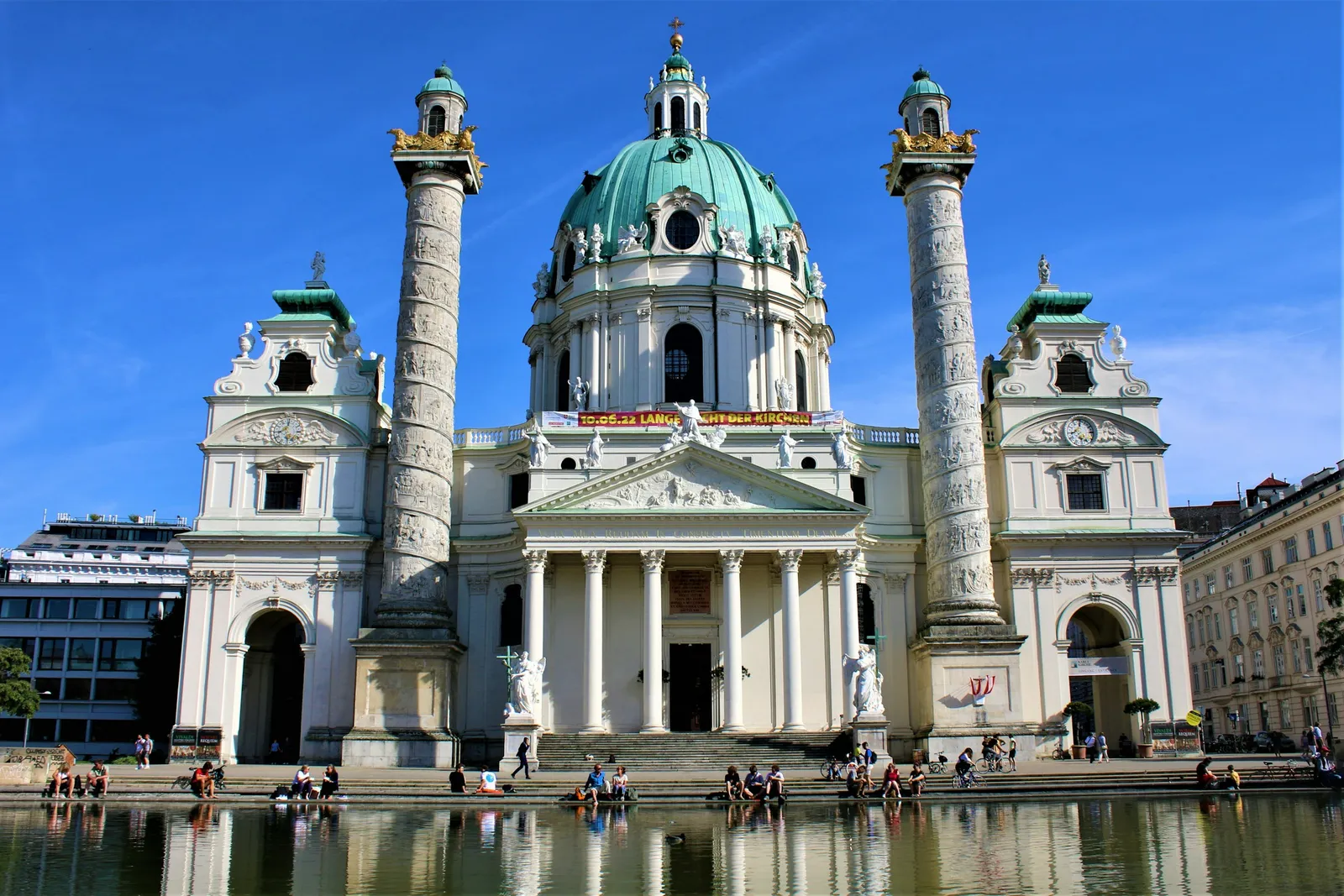
St Charles’s Church marks the start of the tour: Fischer von Erlach’s masterpiece, completed in the mid-18th century, with its two columns that are recognisable from anywhere in the city. In front of it lies the pond, which is full of people sitting on the steps in summer and hosts the Advent market in winter. Next to it is the Wien Museum, which, following its refurbishment, is one of the finest city museums in Europe, and the Technical University, whose students bring a youthful vibrancy to the district.
Karlsplatz itself is a transport hub — with three underground lines, the Opera House on the other side and the Musikverein on the corner — and a park at the same time. For those who live in Wieden, the Innere Stadt isn’t just nearby — it’s right on their doorstep.
The Freihausviertel
The Freihausviertel begins just behind the Technical University: galleries, wine bars, workshops and design shops line Schleifmühlgasse, with the Naschmarkt just round the corner on the border with the Sixth District. The neighbourhood reinvented itself in the noughties without losing its character, and today it is one of the city’s most sought-after places to live for anyone seeking city life rather than the tranquillity of the outskirts.
Here, students live alongside lawyers, artists alongside families, and they all meet up at the Naschmarkt on Saturday mornings. The flats in the old buildings are in high demand, the properties are well-maintained, and anyone selling here has their pick of buyers.
Around St Elisabeth’s Square
Further south, the district becomes quieter. Around Favoritenstraße and Sankt-Elisabeth-Platz, there are well-maintained Gründerzeit-era houses with courtyards, good schools, small shops, and the Theresianum behind its walls — the school founded by Maria Theresa in 1746, whose park is one of the city’s largest private gardens.
This area is the heart of Wieden: middle-class, quiet, with coffee houses that have had the same regulars for decades. Families who live here tend to stay. Flats rarely come onto the market and are often passed on before anyone even puts them up for rent.
To the main station
The district ends at Südtiroler Platz, near the main railway station — the station itself is in Favoriten, but Wieden has benefited from it more than almost any other district. Direct trains to Salzburg, Munich, Prague and Budapest, the airport within easy reach, plus the new Sonnwendviertel on the other side of the tracks. For those who travel for work, Wieden is the perfect place to live.
Wiedner Hauptstraße connects it all — from Karlsplatz to Matzleinsdorfer Straße, with trams, shops and buildings that reflect the district’s transformation: here a palais, there a post-war building, and in between, Gründerzeit architecture in all its forms.
Housing and the Market
On the property market, Wieden is an insider tip that’s no longer a secret: flats in older buildings near the Naschmarkt are rare and in high demand; prices have caught up with those in the First District; and anyone selling here sells quickly. At the same time, the district is small — there are only so many buildings, and new developments are almost exclusively being built on existing rooftops.
We know the houses between Karlsplatz and the Belvedere — those with the beautiful courtyards, those with the converted attics, those with the families who will sell up one day. And we know which courtyards you simply must see to understand why the Wieden district is so reluctant to let its residents go.