Two million: How Vienna’s growth is shaping the housing market
Vienna is once again a city of two million. What this means for flats, prices and districts — and where the city still has room to grow.
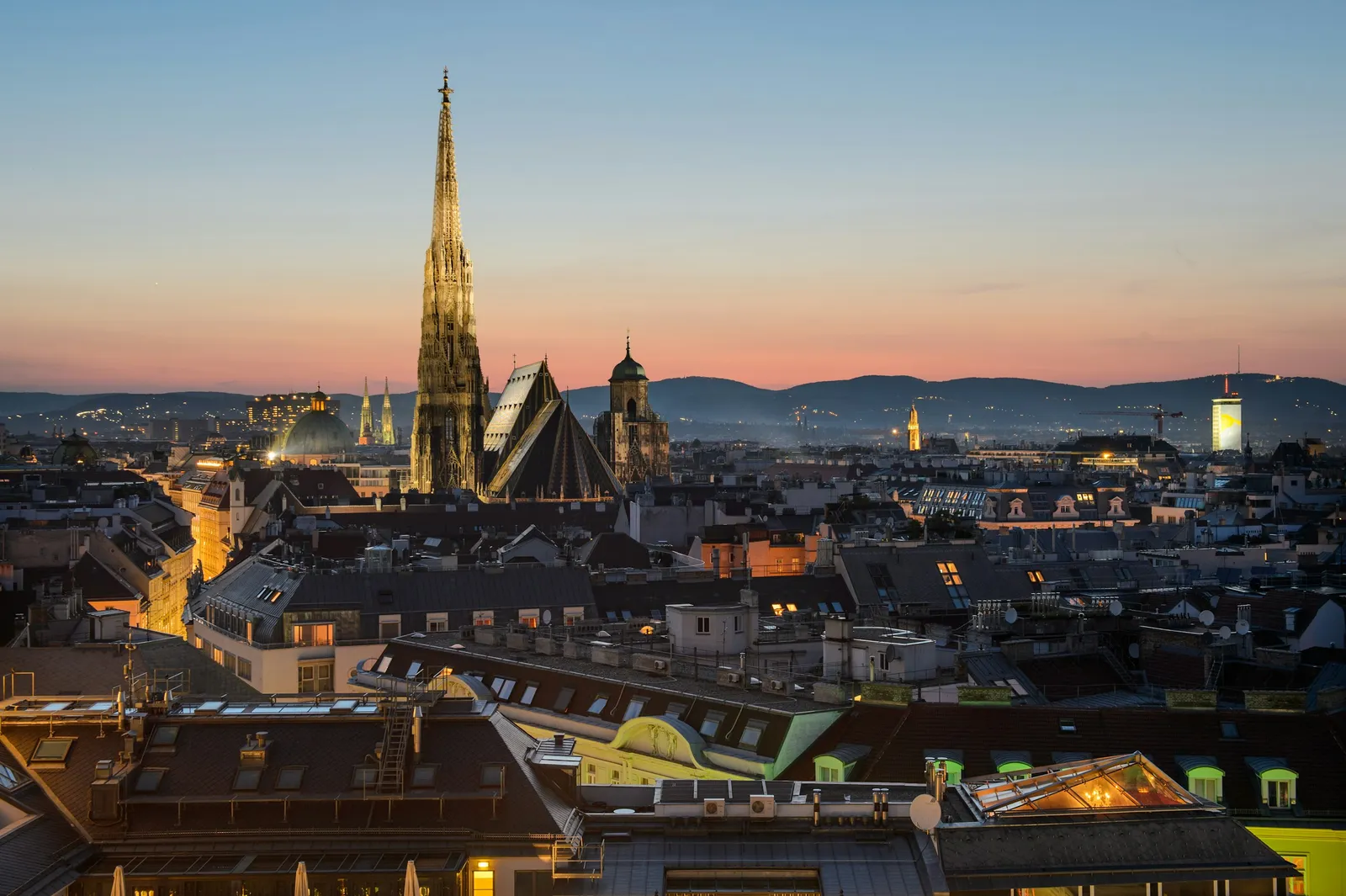
For the first time since the early 1910s, Vienna’s population has once again exceeded two million. Back then, the city was the capital of a multi-ethnic empire and the fourth-largest in Europe; this was followed by a century of decline and stagnation. Since the 2000s, Vienna has been growing again — thanks to an influx of people from the federal states, from Europe and from around the world — and in recent years at a rate rivalled by hardly any other city on the continent.
For the housing market, this figure is the one that explains everything else. Anyone who wants to understand why there is a shortage of flats, why rents are rising and why certain locations retain their value must start by looking at growth.
How Vienna is growing
Growth is not uniform. It comes in waves — following EU enlargement, during the years of refugee movements, and most recently with the war in Ukraine — and it comes primarily from outside: Vienna has more people moving in than births, more people under forty than any other region in Austria, and a growing proportion of one- or two-person households.
This structure shapes demand: smaller flats, central locations, good transport links, flexible tenancy arrangements. It explains why two-room flats in the inner districts are let more quickly than large family flats on the outskirts — and why new-build developments have been focusing on small flats for years.
Where the city is growing
Growth is not taking place in the city centre, but in Favoriten, Donaustadt, Floridsdorf and Liesing — where new neighbourhoods are emerging: Seestadt Aspern, the Sonnwendviertel near the main railway station, the Nordbahnviertel, and the development areas along the underground extensions. These districts have gained tens of thousands of residents over the past twenty years.
The inner districts are hardly growing at all because there is simply no more space there. Their population has remained stable for decades, development is complete, and any new flats being built are either in existing buildings or in converted office blocks. That is precisely what makes them such a stable investment: demand is growing, but supply is not.
What this means for prices
When tens of thousands of people move in each year and, at the same time, fewer homes are being built than planned, pressure builds — first on rents, because newcomers rent before they buy; and, with a delay, on house prices, when tenants become buyers. The years of high interest rates have disrupted this mechanism, not eliminated it.
Vienna mitigates many issues through its subsidised housing scheme: more than half of Vienna’s residents live in council flats or subsidised accommodation, and this structure keeps rents lower overall than in comparable cities. However, in the private sector, particularly in older buildings in the inner districts, supply remains tight — and is becoming even tighter.
What this means for property owners
Property in established neighbourhoods does not lose its value. This is not a prediction, but the experience of the last twenty years, during which Vienna’s population has grown by a quarter. Anyone who owns a Gründerzeit house, a flat in a period building or a villa in one of the inner districts owns something that cannot be replicated.
That does not mean that every price is justified or that every location benefits equally. It means that the general trend is the right one — and that owners wishing to sell are selling into a market that needs them.
What this means for buyers
Waiting rarely makes it any cheaper. Anyone looking for a flat is competing with a city whose population is growing each year by the equivalent of a small town’s population, and with a housing construction sector that has been lagging behind this demand for years. The right strategy is not to wait for prices to fall, but to find the right location — one that benefits from growth, rather than just talking about it.
We take a close look at exactly which areas these are: where infrastructure is being developed, where the city is investing, and where a development area is becoming a neighbourhood. After all, a growing city changes its map, and those who know the new map make better purchases.